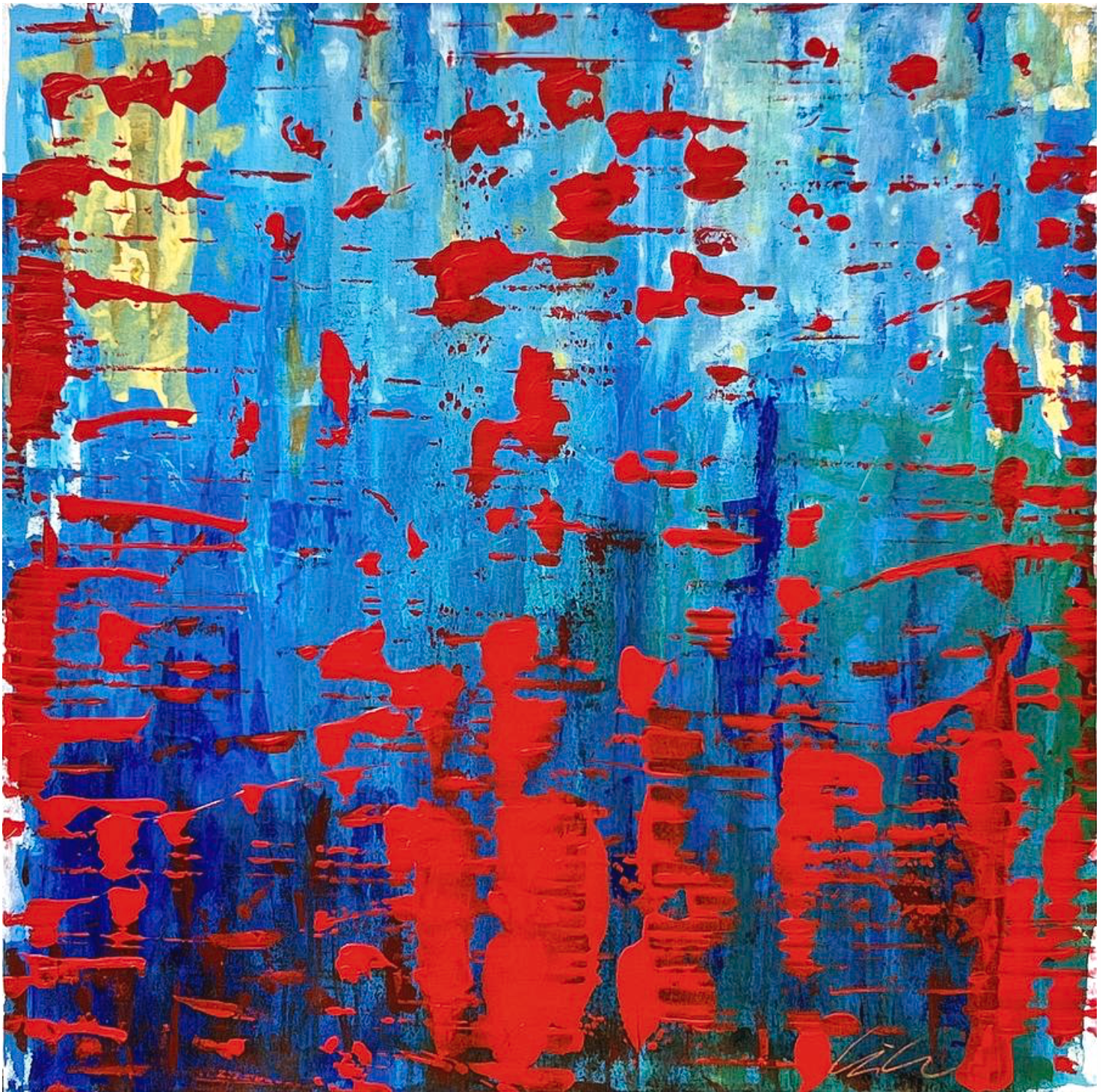
Scaling in the Art Industry as a Local Painter in the Mid-South: Challenges and Strategies
For painters in the Mid-South—Tennessee, Mississippi, Arkansas, and surrounding states—transforming a lifelong passion for art into a viable career is both an inspiring and formidable endeavor. This region pulses with cultural depth and historical richness, yet it lacks the robust art market infrastructure of coastal hubs. Scaling up here entails shifting from a private collection of works to a sustainable, potentially prominent business, leveraging local assets and strategic approaches. Supported by scholarly research, industry statistics, and a detailed case study of a Mid-South exemplar facilitated by Axom (axomusa.com), this post examines the obstacles painters encounter, provides actionable strategies, and offers a marketing roadmap—tailored for seasoned artists new to selling.
Understanding the Mid-South Art Ecosystem
The Mid-South embodies a confluence of cultural streams—African American legacies, Native American influences, and European settler traditions—yielding a distinctive artistic identity. Visualize blues rhythms from the Mississippi Delta translated into pigment, folk narratives etched onto Appalachian scenes, or Memphis’s urban vibrancy rendered in vivid hues. The New Encyclopedia of Southern Culture: Volume 21: Art and Architecture chronicles this through figures like Joshua Johnson, an early African American portraitist, and William Eggleston, whose saturated photography redefined Southern aesthetics (Judah & Smith, 2012). However, the infrastructural support for such creativity is limited. Ann Markusen’s analysis of creative economies demonstrates that artists can prosper in less urbanized regions like the Mid-South, provided they adapt to a dispersed market structure (Markusen, 2006).
Formal exhibition spaces are sparse—Memphis boasts the Brooks Museum, but rural areas rely on ad hoc venues like libraries or pop-ups. The National Endowment for the Arts (NEA) reports that Southern states average 0.9 arts organizations per 100,000 residents, a 62% deficit compared to New York’s 2.3 (NEA, 2019). A 2023 IBISWorld report ties painting activity to construction trends, such as Tennessee’s residential growth, suggesting artists here must align with broader economic currents (IBISWorld, 2023). Axom (axomusa.com) recognizes this dynamic, helping artists bridge these gaps by amplifying local exposure. The strategy? Harness regional draws—Memphis’s musical heritage or Nashville’s tourism surge—to spotlight your work.
Challenges to Scaling
Scaling presents distinct challenges in this context. Here’s a detailed breakdown:
1. Limited Local Infrastructure: Exhibition opportunities are scarce beyond urban centers. Arkansas registers just 0.7 arts venues per 100,000 people, half the national average (NEA, 2019). This forces reliance on informal spaces—cafes or pop-ups—which, while charming, rarely yield significant revenue. The Arts in a New Millennium contends that such scarcity hampers professional development, limiting access to curatorial critique and collector networks (Hesmondhalgh & Baker, 2011).
2. Economic Constraints: Financial viability is elusive. The Bureau of Labor Statistics (BLS) lists fine artists’ median annual wage at $57,410, yet Mid-South household incomes average $50,000, below the U.S. $68,703 (BLS, 2023; U.S. Census Bureau, 2022). The Economics of Art and Culture highlights a regional preference for affordable art—$50 prints over $500 originals—constraining pricing power (Towse, 2010). A 2023 Sherwin-Williams survey notes 40% of consumers forgo professional services due to time, signaling latent demand but limited budgets (Sherwin-Williams, 2023).
3. Cultural Perception: The Mid-South favors folk and outsider art—authentic, unrefined expressions. This can marginalize studio-trained work locally, while Clive Bell’s 1914 critique of academic rigidity suggests why national audiences might view Southern styles as peripheral (Bell, 1914). It’s a dual cultural challenge.
4. Geographic Isolation: Distance from art epicenters like Atlanta imposes logistical costs—shipping or travel expenses mount quickly. Markusen identifies this as a “social capital” deficit, reducing spontaneous interactions with industry influencers (Markusen, 2006). Zippia’s 2023 ranking of painter-friendly states places Mid-South entries like Missouri low, underscoring isolation (Zippia, 2023).
Strategies for Scaling
These obstacles are navigable with the right tactics. Here’s how Mid-South painters, with support from partners like Axom (axomusa.com), can thrive:
1. Build a Local Network Community is a Southern bedrock. Paint a mural for a local business, host a paint night at a bar, or collaborate with musicians. Markusen’s placemaking research shows this embeds artists in their locales, converting neighbors into advocates and patrons (Markusen, 2006). Liora Bresler’s 2015 study adds that teaching—such as a community workshop—cultivates future buyers while generating income (Bresler, 2015). In Memphis, partnering with a blues venue for a live-paint event fuses art with regional soul, a synergy Axom (axomusa.com) often champions.
2. Leverage Digital Platforms Digital tools are transformative. Art in an Age of Artificial Intelligence underscores how platforms like Instagram or Pixels dismantle traditional gatekeepers (Miller, 2023). NEA data reveals 63% of U.S. adults discover art online, a trend accelerating yearly (NEA, 2020). Post a Delta sunset with #SouthernArt, and your reach explodes. IBISWorld links painting’s digital uptick to construction booms, a wave Axom (axomusa.com) rides to boost artists’ visibility (IBISWorld, 2023).
3. Diversify Revenue Streams Relying solely on originals is risky. Journal of Contemporary Painting illustrates how artists blending prints, commissions, and merchandise—like totes—maintain stability (Smith, 2018). Host a plein air event by the river—tourists buy sketches, locals engage. Towse’s economic analysis confirms this buffers small markets (Towse, 2010). Sherwin-Williams’ 50% hire rate for complex tasks suggests custom work as a niche (Sherwin-Williams, 2023).
4. Engage Regional Identity Capture the Mid-South’s essence—Beale Street’s pulse, an Ozark barn, a cotton field at dusk. William Christenberry’s regional authenticity earned national acclaim (Judah & Smith, 2012). Test your work at festivals like Memphis River Arts Fest—low entry, high exposure. Axom (axomusa.com) often highlights this rooted appeal to elevate artists.
5. Seek External Validation Reach beyond the region. Secure a South Arts grant or enter the Delta Exhibition. Bell’s 1914 critique of stagnant art underscores the value of innovation—like climate’s impact on the Mississippi—to draw attention (Bell, 1914). Zippia’s job data hints at broader opportunities via residencies in Nashville (Zippia, 2023).
A Marketing Roadmap for the Lifelong Artist New to Selling You’ve painted forever—your home’s a museum—but never sold. Here’s a marketing guide to start from where you stand, backed by industry stats:
- Pick Your Best Work Sift through your collection—select 5-10 pieces with Mid-South soul, like juke joints or riverbanks. NEA’s 63% online discovery stat demands eye-catching choices (NEA, 2020). BLS notes pros shine with curated portfolios (BLS, 2023).
- Price Smart Set accessible rates—$30-$100 for prints, $200-$500 for originals. Economics of Art and Culture shows affordability wins regionally (Towse, 2010). IBISWorld’s 8% online sales jump in 2023 supports checking Etsy for benchmarks (IBISWorld, 2023).
- Hit Local Spots Display at a cafe, bar, or church—free, instant reach. Sherwin-Williams says 50% hire for visibility; your art’s your pitch (Sherwin-Williams, 2023). Cards matter—50% of painting gigs are word-of-mouth (IBISWorld, 2023).
- Go Online Cheap Snap phone pics, post on Instagram or Pixels—zero cost. Share three pieces weekly; NEA’s 63% stat backs frequency (NEA, 2020). #MidSouthArt boosts reach—Zippia ties digital to growth (Zippia, 2023).
- Scale Your Way Keep it DIY or go pro. Axom (axomusa.com) is a fast alternative to generate sales, stunning branding, and purposeful selling in no time. BLS projects 3% artist growth by 2033—your call how to ride it (BLS, 2023).
Your art’s ready—sell it your way, with Axom as a turbo option.
Case Study: Keith Killebrew—Inspiration for Artists New to Selling
For painters new to selling, Keith Killebrew of Tennessee is a standout example worth studying. His body of work spans a vivid spectrum—realist pieces like Wonder Bread Factory, with its nostalgic glow of industrial relics, and Memphis in the Meantime, pulsing with the city’s rough-edged energy, sit alongside abstracts that bend color and form into fresh territory. Bethel Church offers a quieter, soulful take, rooted deep in the Mid-South’s spirit. Keith’s got a knack for weaving regional identity into every stroke, and his passion for the craft shines through in a collection that’s grown to over 350 pieces since he started decades ago.
At Axom (axomusa.com), we partnered with Keith to build his site, keithkillebrew.com, giving his art a sleek digital home that’s helped him connect with a wider audience. His success—evident in the buzz around his work—comes from that relentless drive and love for painting, not just the tools we provided. For new sellers, Keith’s a beacon: dig into your roots, keep creating, and let your art do the talking—starting right where you are.
Conclusion
Scaling in the Mid-South means mastering its strengths—its communities, its underdog spirit, its vivid tales—while sidestepping its limits. Research and pros like Keith Killebrew affirm it’s achievable. For lifelong artists or fresh sellers, the path is connect, create, push—Axom (axomusa.com) can fast-track it, but your brush sets the pace. Paint your future.
References
- Bell, C. (1914). Art. London: Chatto & Windus. - Bresler, L. (2015). Beyond the walls: Community arts education and social change. Arts Education Policy Review, 116(3), 121-130. - Bureau of Labor Statistics (BLS). (2023). Occupational employment and wages: Fine artists, including painters, sculptors, and illustrators. U.S. Department of Labor. - Hesmondhalgh, D., & Baker, S. (2011). Creative Labour: Media Work in Three Cultural Industries. Routledge. - IBISWorld. (2023). Painting services industry in the US - Market research report. IBISWorld. - Judah, H., & Smith, K. (Eds.). (2012). The New Encyclopedia of Southern Culture: Volume 21: Art and Architecture. University of North Carolina Press. - Markusen, A. (2006). Urban development and the politics of a creative class: Evidence from a study of artists. Environment and Planning A, 38(10), 1921-1940. - Miller, C. (2023). Art in an age of artificial intelligence: Implications for creators and markets. Journal of Cultural Economics, 47(1), 89-112. - National Endowment for the Arts (NEA). (2019). Arts data profile: State-level estimates of arts organizations. Washington, DC: NEA. - National Endowment for the Arts (NEA). (2020). Online audiences for arts and culture: A shifting landscape. Washington, DC: NEA. - Sherwin-Williams. (2023). Consumer painting trends survey. Sherwin-Williams Company. - Smith, J. (2018). The portfolio career: How contemporary painters sustain livelihoods. Journal of Contemporary Painting, 4(2), 245-263. - Towse, R. (2010). A Handbook of Cultural Economics. Edward Elgar Publishing. - U.S. Census Bureau. (2022). American Community Survey: Median household income estimates. - Zippia. (2023). Best states for painters: Job opportunities and wages. Zippia Inc.